September, 2026
Let's start with being honest: sometimes the best thing we can do is hope and survive. An honest approach tells us that we live amongst the everyday challenges and struggles of life: on top of that, we live in times of ecocide, genocide and ongoing assaults on most life on Earth, human communities and our individual and collective psyches. The whole aim of the sustainability, permaculture, regenerative agriculture, conservation and food justice, etc approaches is for the very survival of life: human life, and the wider web of all life.
At Garden Juju Collective we often find ourselves defending: defending forests, heritage plantings, food forests - patches of land holding richly woven mosaics of life. We are constantly fighting general skepticism and misinformation around sustainability practices, approaches, techniques and ethics. At the same time we remember and note that given the opportunity - indeed any opportunity - living systems are self-making and self-healing in the long term. We have written and presented on the need to defend life and permaculture-inspired, regenerative conservation projects and places.
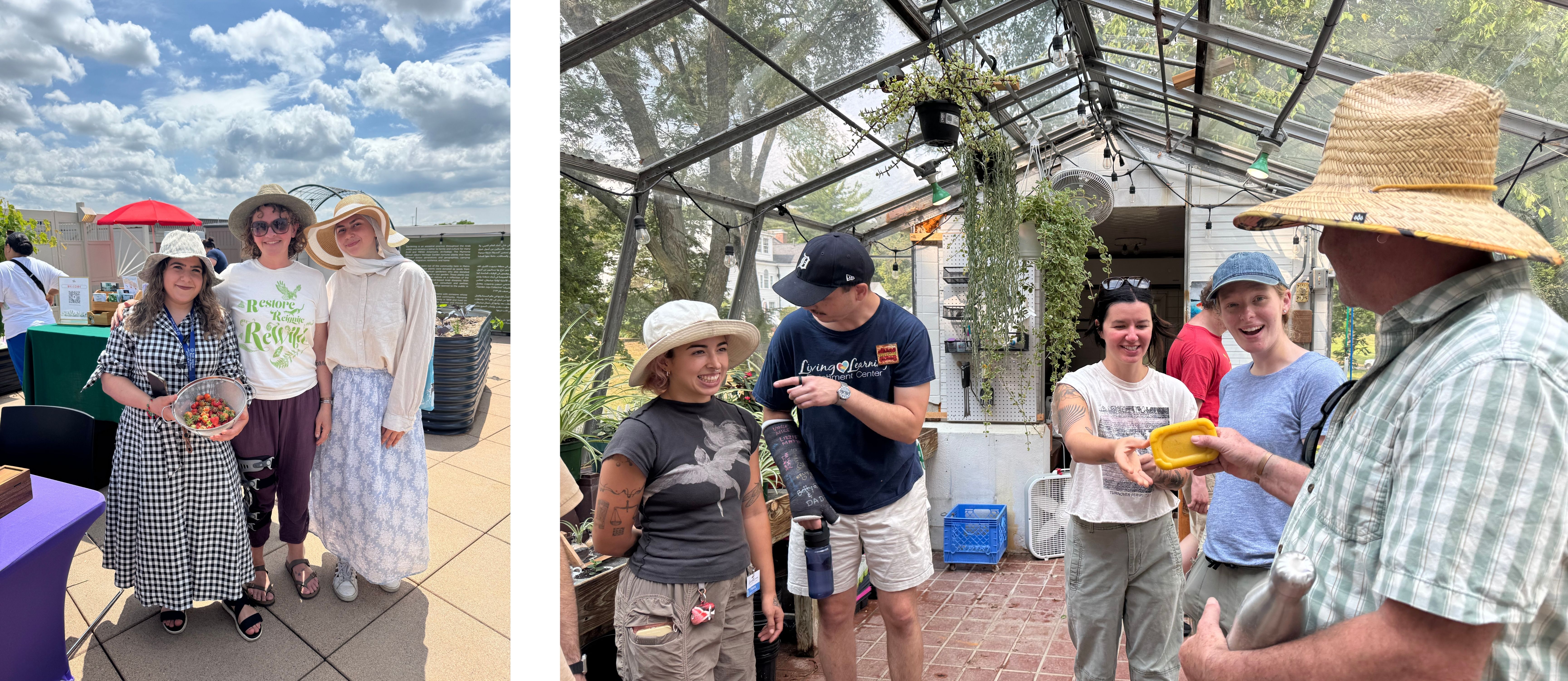
At Gateway Farm in Michigan we’re defending, surviving and thriving. Over a period of 10 years we’ve helped to turned an old golf driving range into a 12-acre sanctuary for life: local wildlife, organic and heritage foods, our workers and staff and our neighboring community. It’s not an easy thing to do. The dominant forces of this area are in favour of highways, strip malls and housing developments, with food and other consumables largely brought in from other places overseas - where conditions are even more exploitative. The economic ethos is extractive and degenerative as opposed to regenerative: building up all the systems that make a place like Gateway Farm possible.
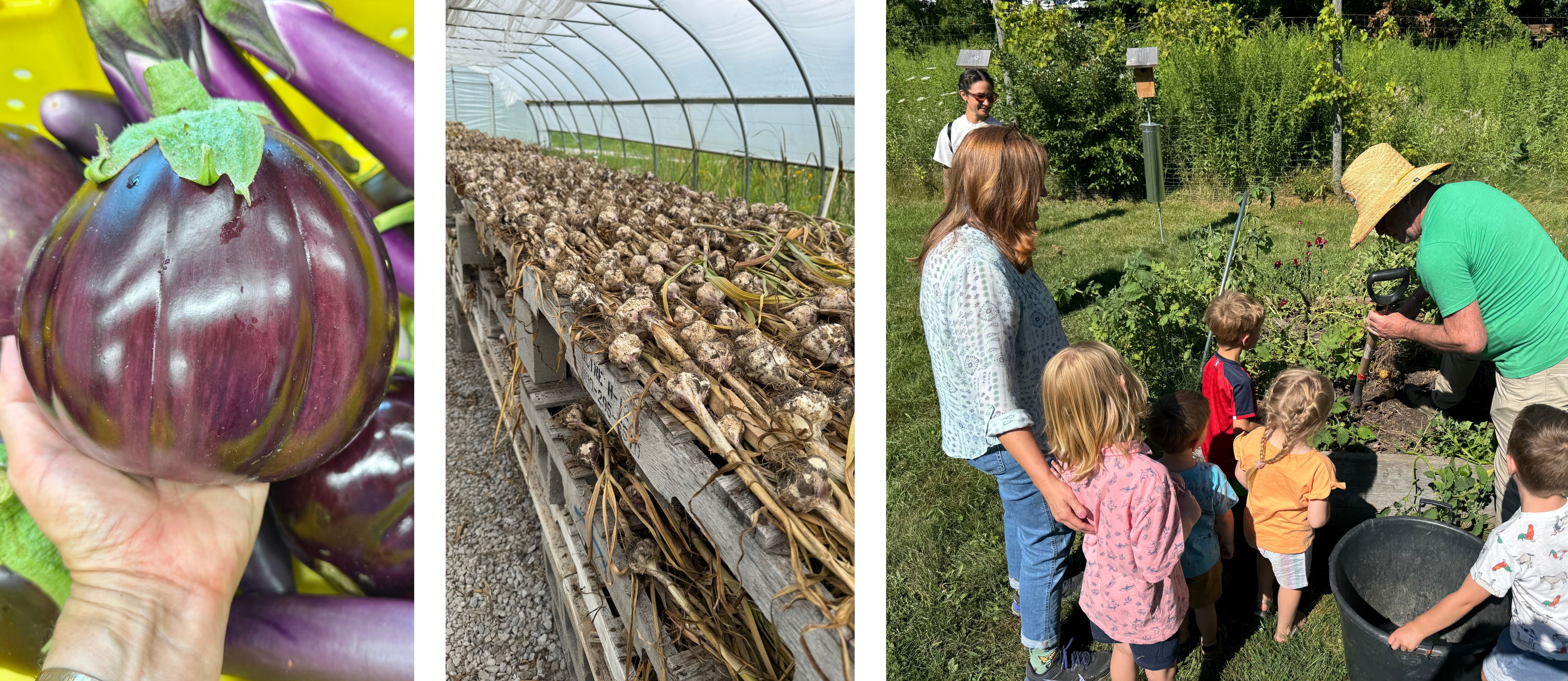
We find ourselves surviving - even just hoping to survive. Many peoples’ consciousness is centered around some form of virtual reality - some combination of online simulations and uber-simulated lives - generally lived mostly indoors. Fewer and fewer people these days live the majority of their lives outdoors. Some of the people who do work outdoors are gardeners, farmers, conservation and construction workers. Maybe we consciously or subconsciously find distractions, because facing into it everything, all the time, seems too much. After a day of Garden Juju Collective and/or Gateway Farm work, we often find ourselves immersed in a show of some sort. We wish it were different too - it feels like we’re barely surviving.
It often feels like we are hanging on.
The news from outdoors: parts of it are beautiful, beautiful beyond words. The earth is our home. Our only home. And it is truly magnificent. Many people are in awe of the trees, beaches, rivers and million little miracles that surround us. But the wider reality is brutally concerning. With economic, political forces generally hostile to the conditions for life, the results are only too clear - climate extremes, heat waves, wildfires, drought, massive biodiversity decline and the appalling maldistribution of wealth, resources and power.
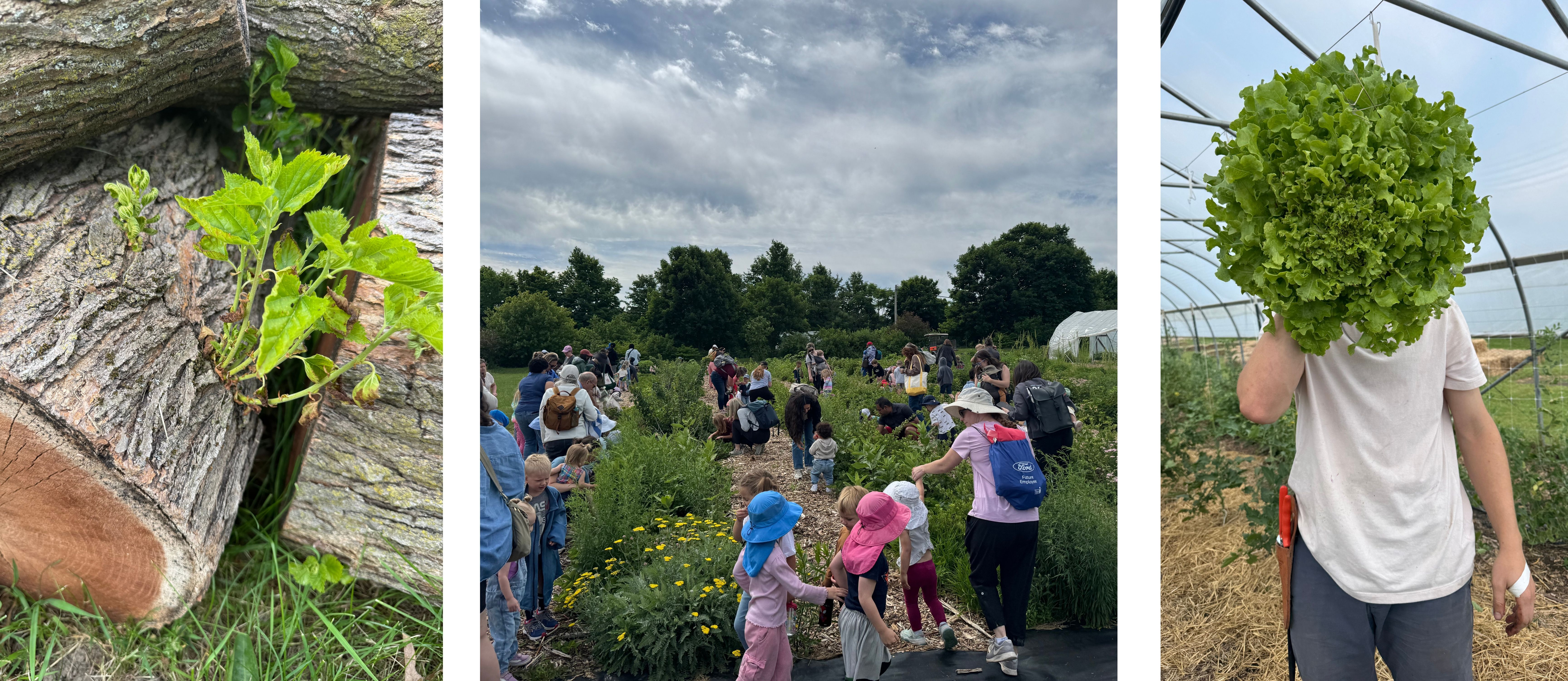
But also... in spaces and places, in-between places, in nooks and crannies, occupying all manner of situations - we can find communities of resilience, people who understand the reality of the living world and have strategies to survive and then hopefully thrive. They have set up practices in the face of mainstream culture, expectations, economics - from composting, veggie gardens, tool shares, seed-swapping, community markets, keeping chickens or quail, community gardens, re-creating forests, maker spaces, and book clubs. They learn and teach how to cook from real ingredients, write and post provocative stories, go walkabout traveling the world’s amazingness, sing in choirs, have loving relationships, and find myriad beautiful ways to care for themselves and the world around them.
These communal change-makers have ideals and they live their lives dedicated to realising them. Maybe they co-create sanctuaries where life is fully valued. Certainly to do this they need to be able to imagine, to visualise what these places might look and feel grounded in their ideal state. In our recent newsletter, we review some of Rob Hopkins work about the vital importance of imagination. And maybe this imaginative realm is not just in human minds but a life-wide collective realm.
About Butterflies, Hummingbirds and Snakes:
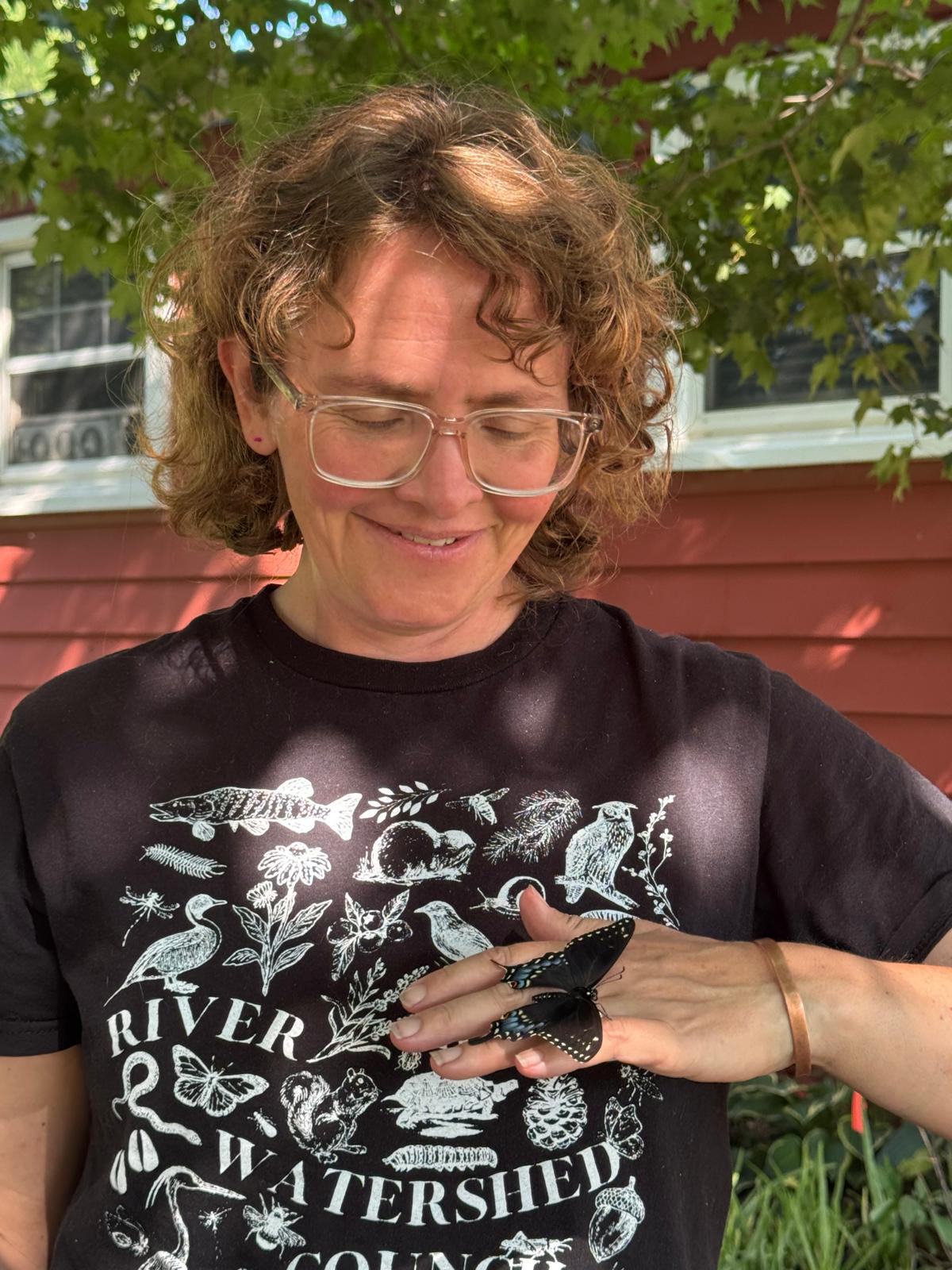
We have a garden around the farm house where we live at Gateway Farm: in many ways, the farmhouse garden is a continuation of the farm grounds. It has a series of beautiful maple trees that offer much needed summer shade where we hold yoga classes, children’s storytime, gatherings and farm-to-table dinners. Our WWOOF volunteers and Staff sit together under these branches to eat meals, read books and sometimes gather around evening fires. All through the farmhouse garden are a series of raised garden beds where we grow all sorts of vegetables, fruit (our raspberries are in peak season right now!) and pollinators, including Mexican Sunflower, Milkweed, Zinnia, Pineapple Sage, Spearmint and Ageratum.
If you sit quietly and pay attention, you may be lucky enough to see a humming bird or two hovering next to a flower, then zipping to another and another. Each sighting is truly a breathtaking wonder. As the farm has regenerated over the 10 years, the soil life, insect life and various habitats have become more prevalent - including the snake population of the farm. Scientifically, this is a great indicator of the ecological health of the place. The staff here have all given names to the garter snakes that appear when they are harvesting or watering the crops. On a couple of occasions, we’ve seen Milk & Blue Racer snakes. As we say over and over, it's amazing how life bounces back when left alone, or given a helping hand.
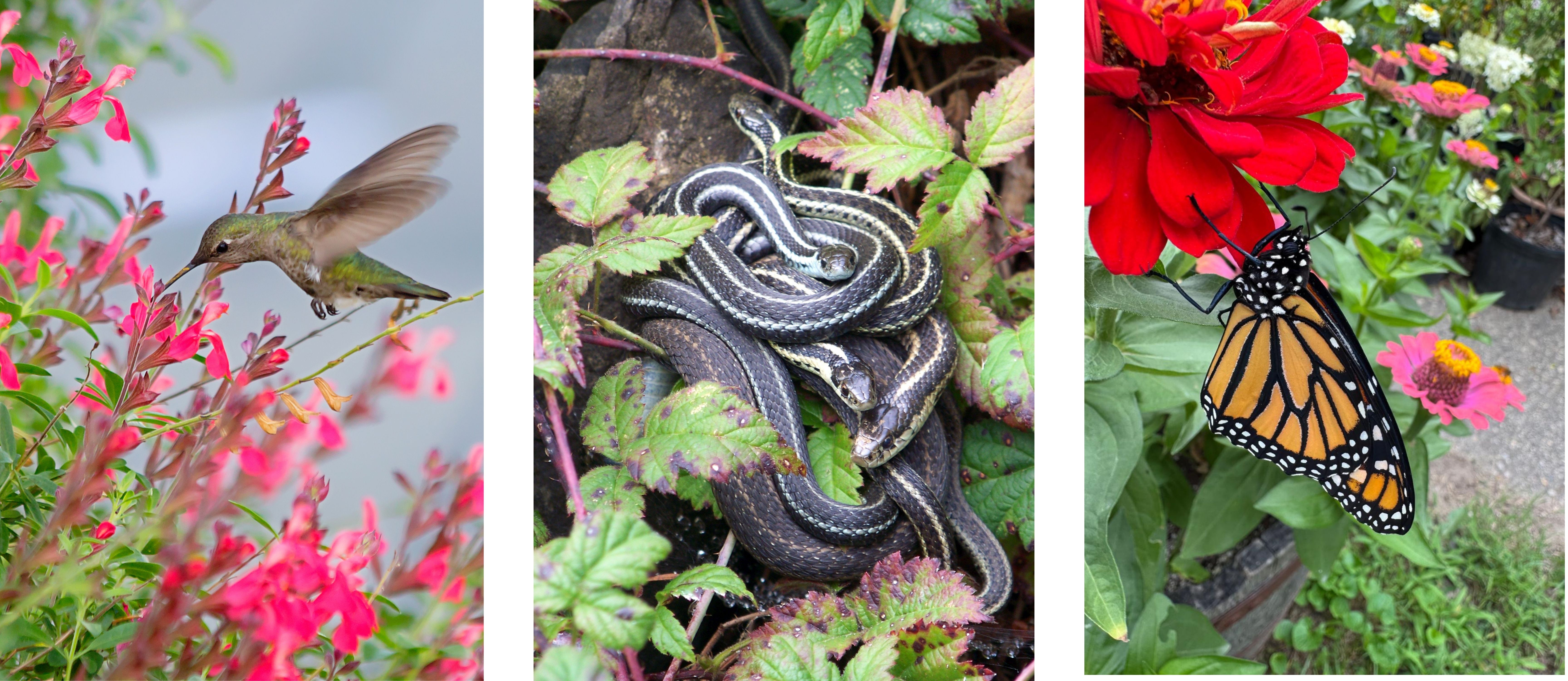
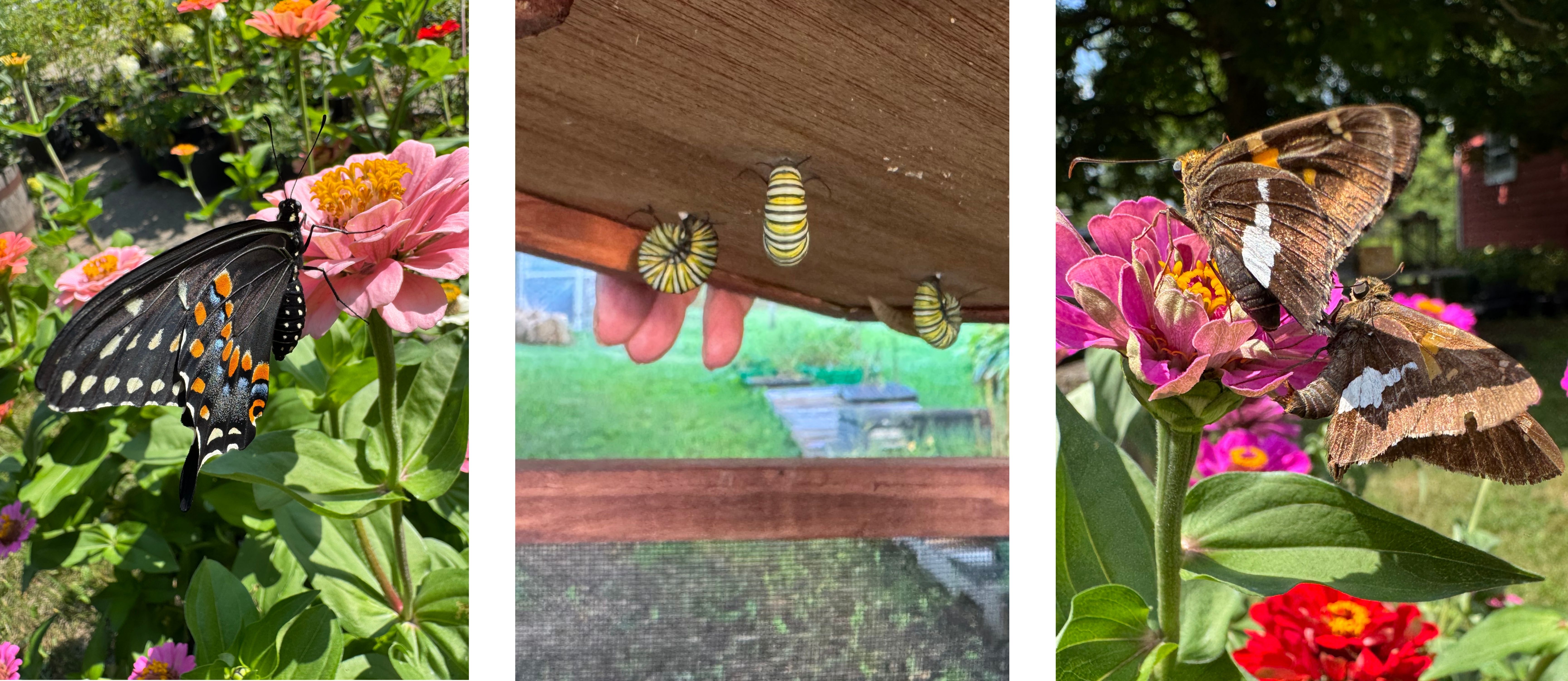
The real glory this year has been our butterfly project. Maybe 50+ years ago, we would have seen uncountable numbers of butterflies in fluttering clouds around our farms and gardens. Not now. In recent years, we have counted just one on our Milkweed, Mexican sunflowers, or Buddleia - a shrub literally known as the Butterfly Bush around the world.
So we (particularly Bridget) set about supporting the butterflies and moths. As in previous years, she obtained a butterfly hatchery - basically a timber framed box with sides made from insect netting. It’s placed outside on a table, under a tree and whenever we find a caterpillar during our harvests we collect it, along with whatever leaves it is eating and put it into the hatchery. The caterpillars grow, eating the leaves until it forms a chrysalis, then pupates into a butterfly and then we release it. The whole purpose is to give the growing caterpillars a safe shelter to ensure they are not eaten by birds, stepped on or crushed in our crop fields.
The released Butterflies are Monarchs, Yellow Swallowtails, Black Swallowtails, and Fritillaries. The Monarchs fly endlessly around the Farmhouse garden everyday this year - 1, 2 and sometimes 4 at a time. Often other butterfly species are in the mix, like Yellow Sulphur, Cabbage Whites too, and occasionally you can glimpse the hummingbirds flitting from flower to flower.
With our heads neither in a computer nor in a meeting, we return to the imaginal realm where life is strong and revered.